
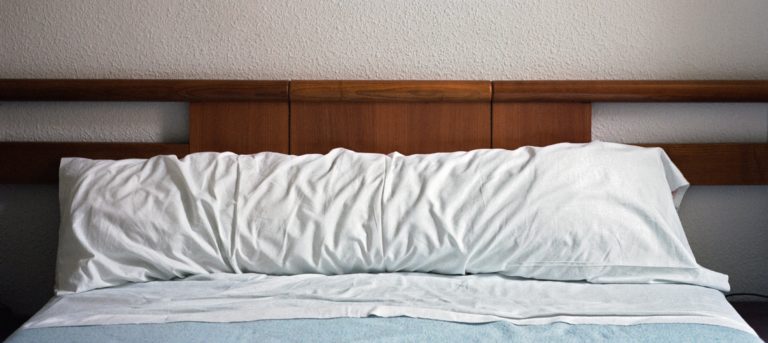
Healthy sleep for back sleepers: 4 tips
Back sleepers are the most back-friendly sleepers, as the vertebral bodies are relieved of pressure from the body and this pressure is ideally distributed over a larger support surface. The muscles can also relax and the intervertebral discs regenerate by absorbing fluid. This process is particularly important so that the intervertebral discs remain elastic and can absorb shocks and vibrations every day.
Nevertheless, it is worth taking a closer look at your sleeping posture. This gives you the opportunity to notice any errors and significantly improve the quality of your sleep.
So, healthy sleep all round? Here are 4 tips for restful back sleep
- Natural posture for the spine:
Lying on your back, you should neither lie too hard nor too soft in order to provide optimum support for the lordosis of the spine. If the mattress is too soft, the back can "sag" and movement during sleep becomes more difficult. Make sure that you are lying in the correct zoning area of your mattress. This allows you to benefit from the point elasticity and relax your back.
- Less pillow is more:
It is better to use a narrow pillow to sleep on your back. Pillows that are too thick, too high and too many will cause you to overstretch your neck and press your chin onto your chest. This can damage your entire back and lead to pain, which can be avoided with a suitable pillow.
- It is better not to sleep on your back if you snore:
Although the supine position is generally very back-friendly, it cannot be recommended without restrictions. If you tend to snore, it is better to sleep on your side or stomach. In the supine position, the tongue can fall into the throat more easily, so snoring is inevitable for many people.
- For back and shoulder pain, lying on your back provides relief:
If you occasionally develop pain in your back and shoulders from the strain of everyday life, then lying on your back is just the thing for you. A pillow under your knees or the small of your back can provide additional relief for the lumbar vertebrae and prevent a hollow back.